
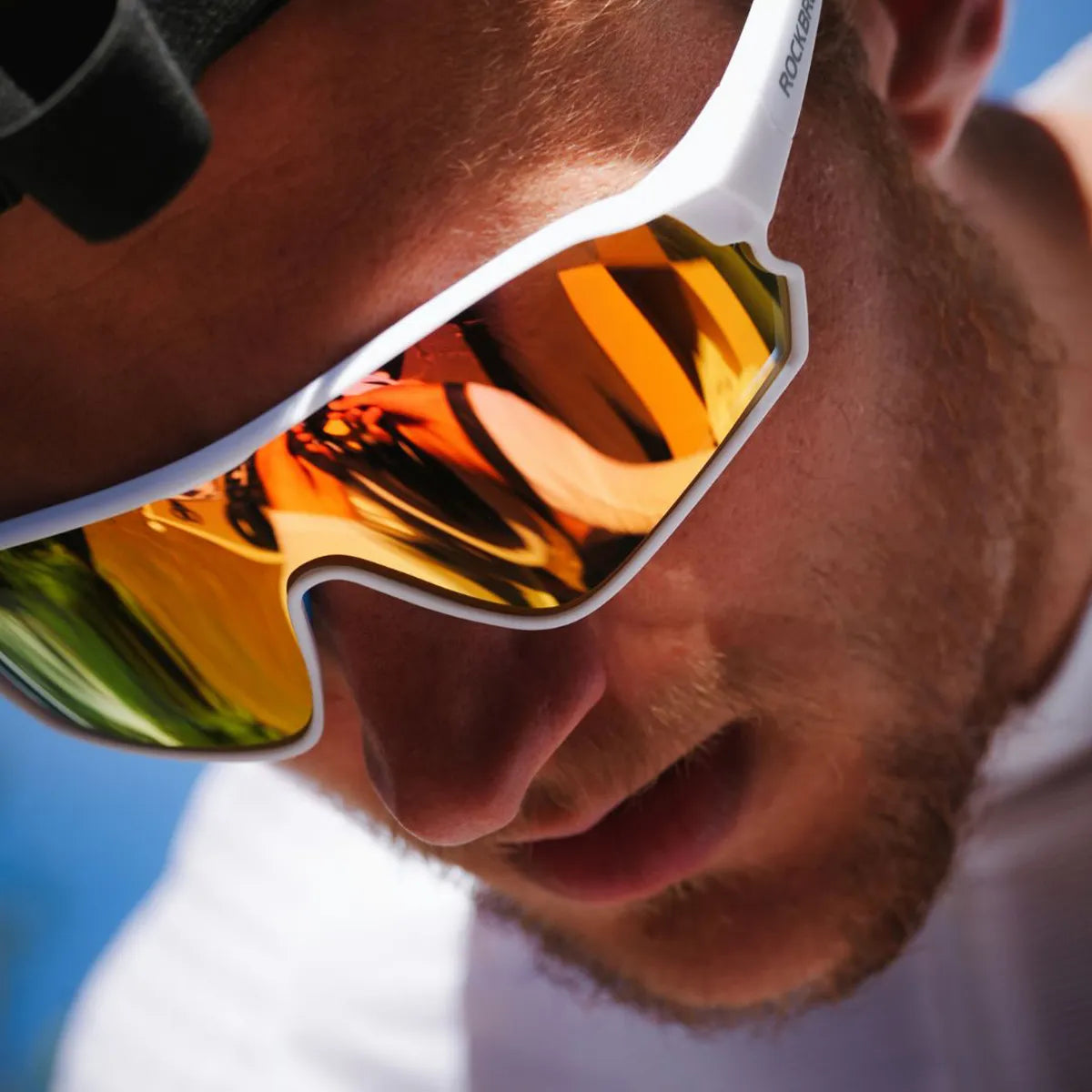
Australian summer rides can take you from bright coastal roads to shaded paths in minutes. The right cycling sunglasses should help protect your eyes from UV, feel comfortable with your helmet, and suit the changing light on your route.
But with polarised, photochromic and interchangeable lenses available, choosing a pair is not always straightforward.
This guide explains what to look for, how different lenses work, and how to find a comfortable fit for commuting, road cycling or riding on trails.
Why Wear Cycling Sunglasses?
Cycling sunglasses do more than reduce brightness. Depending on their design, they can also help shield your eyes from:
- Wind and airborne dust
- Flying insects
- Road debris and grit
- Reflected glare
- UV radiation
A close-fitting or wraparound frame can provide useful coverage, especially on exposed roads or windy days. However, coverage alone does not tell you how much UV protection a lens provides. Always check the specifications for the exact lens you plan to wear.
Start With UV Protection
When comparing cycling sunglasses, check the product’s UV protection information before choosing a lens colour or style.
Does a darker lens provide better UV protection?
Not necessarily. A dark tint reduces the amount of visible light reaching your eyes, but the colour or darkness of a lens does not tell you how much UV radiation it filters.
The same applies to mirrored lenses: the mirror finish alone is not proof of UV protection. Check the label or product specifications for the exact lens.
Are polarised lenses automatically UV-protective?
No. Polarised lenses are designed to reduce reflected glare, such as glare from water or wet roads. UV protection is a separate feature, so check both when comparing products.
A polarised lens may suit a bright coastal ride, but you should still confirm its UV protection and make sure you can read your bike computer or phone screen through it.
What do Australian lens categories mean?
When shopping for sunglasses in Australia, check the lens category, UV protection information and any usage warnings on the label.
Australia’s mandatory standard for sunglasses and fashion spectacles is based on parts of AS/NZS 1067.1:2016. Different types of eyewear may be subject to different requirements, so check the product’s intended use and documentation.
For general guidance:
| Lens category | General use |
|---|---|
| Category 0 | Very low glare reduction. These are fashion spectacles rather than sunglasses and may provide limited or no UV protection. |
| Category 1 | Limited glare reduction and some UV protection. Not suitable for driving at night. |
| Category 2 | Medium glare reduction and good UV protection. |
| Category 3 | High glare reduction and good UV protection. Often suited to bright daylight. |
| Category 4 | Very high glare reduction. Not suitable for driving or road use. |
Some clear or lightly tinted lenses may offer UV protection, but you should check the specifications for the exact lens rather than assume they do. For night riding, use a lens suitable for night-time conditions and check the product’s usage advice.
You can read more about lens categories and warnings on the ACCC Product Safety website.
Polarised vs Photochromic vs Interchangeable Lenses
The best lens depends on where and when you ride. Think about the light conditions on your usual route, including the return trip.
| If you need… | Consider… | Check before buying |
|---|---|---|
| Less reflected glare on bright coastal roads or near water | Polarised lenses | Confirm UV protection separately and check whether you can read your screens. |
| One lens for a ride that moves between different light conditions | Photochromic lenses | Check how light and dark the lens becomes, and remember that tint changes take time. |
| Different lens options for different rides | Interchangeable lenses | Check which lenses are included and read the specifications for each one. |
| Glare reduction on a bright, exposed road | Fixed-tint category 2 or 3 lenses | Choose the tint for the conditions and check the label and usage warnings. |
| Clear vision for a ride after dark | A clear lens suitable for night use | Check the manufacturer’s usage advice and avoid dark lenses after dark. |
Polarised lenses: useful for reflected glare
Polarised lenses can make riding more comfortable when reflected glare is a regular issue. They may be worth considering if you often ride beside the water or on wet roads in bright conditions.
They are not essential for every rider. Some screens can be harder to read through polarised lenses, so check your bike computer or phone before setting off.

Photochromic lenses: useful when light changes
Photochromic lenses change tint in response to light. They can be convenient for rides that start in softer morning light and continue into brighter conditions.
Before choosing a pair, check its lightest and darkest tint levels. A photochromic lens takes time to change, so it may not adjust immediately when you enter a tunnel or move into deep shade.
Interchangeable lenses: useful for different rides
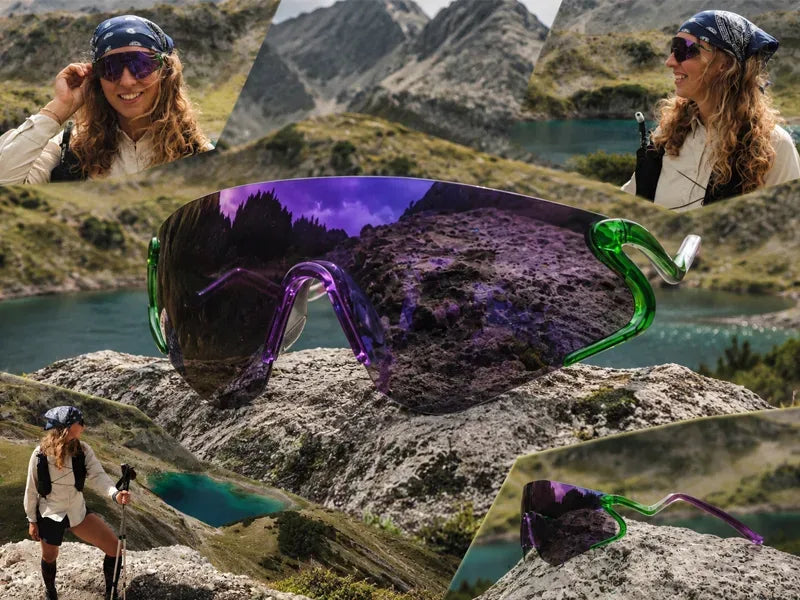
Interchangeable lenses let you select a lens before your ride or change it at a suitable stop. This can be useful if your riding includes bright daytime commutes, shaded paths and occasional rides after dark.
Check what is included in the set and read the specifications for each lens. Do not assume every lens in a set has the same polarisation, UV protection or usage rating.
For example, the ROCKBROS SP402 cycling sunglasses come with three interchangeable lenses: polarised, yellow and clear. Check the specifications and usage advice for each lens before riding.
How to Find Cycling Sunglasses That Fit Your Helmet
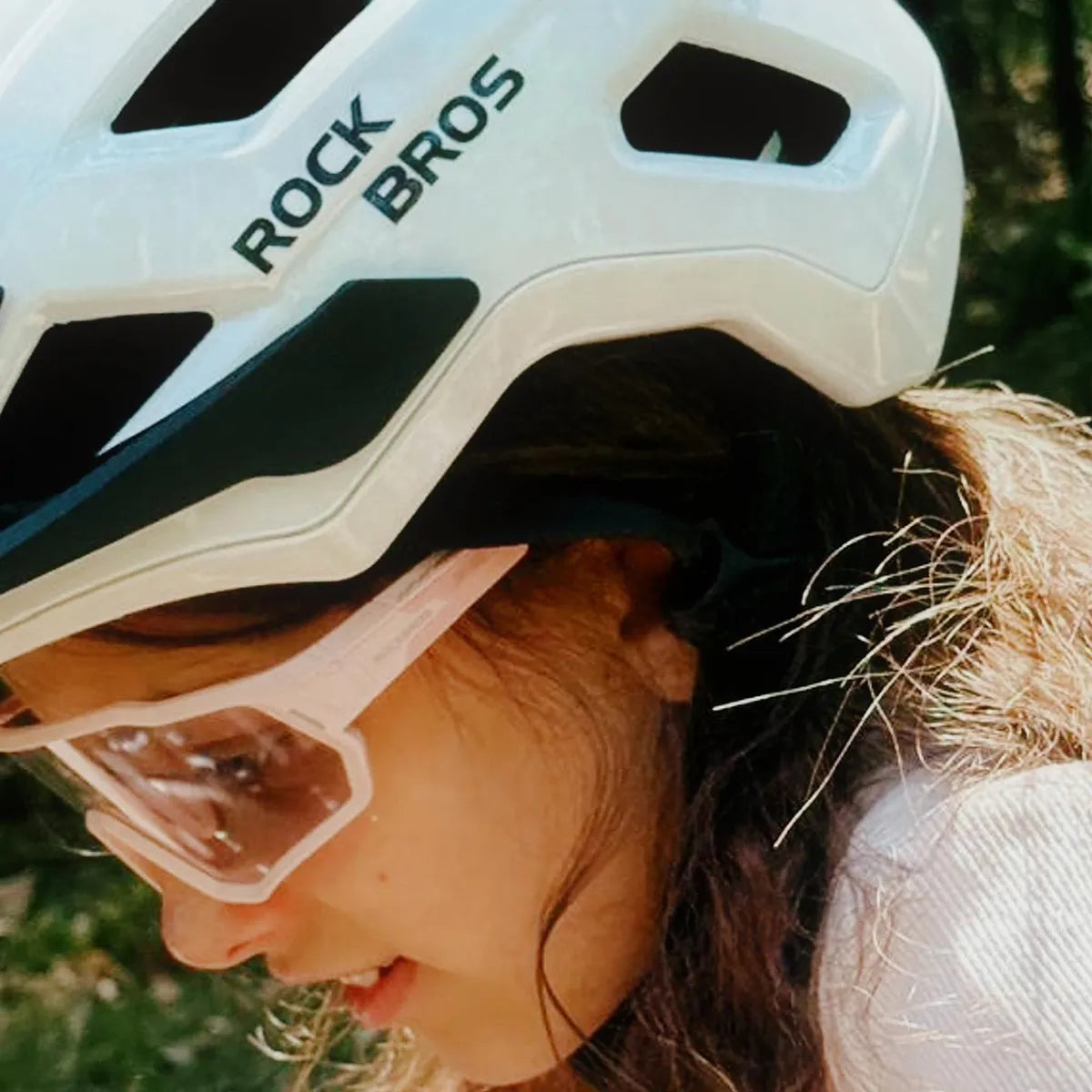
A pair of sunglasses can feel comfortable in your hand but fit differently once your helmet is on. If possible, try them with the helmet you usually wear.
1. Check the arms and helmet straps
Put your helmet on and fasten it as you normally would. Check that the glasses do not pinch behind your ears, press uncomfortably against the helmet, or disturb the straps.
2. Look up from your riding position
Lean forward as you would on your bike and look ahead. The upper edge of the frame should not sit awkwardly in your line of sight.
This is especially useful to check if you ride a road bike in a lower position.
3. Check side vision
Turn your head as though you are checking for traffic. The frame should not obstruct the view you need around you.
Wraparound designs can help shield your eyes from wind and grit, but comfort and visibility still matter.
4. Move your head
Look down and turn your head from side to side. If the glasses already slide down your nose, try another fit or look for a design with grip at the nose pads and arm tips.
A secure fit matters on long summer rides when you may be sweating or moving over rough surfaces.
Which Cycling Sunglasses Should You Choose?
For commuting
Choose for both halves of your trip.
If you ride to work in daylight but return after dark, a dark lens may not suit the journey home. Consider carrying a suitable clear spare lens or choosing an interchangeable set with a clear option.
Also check that the glasses sit comfortably with your helmet and do not obstruct your view when looking over your shoulder.
For road cycling
On a long, exposed ride in bright daylight, category 3 sunglasses can be a useful starting point. Category 2 may suit riders who prefer a brighter view or ride in less intense light.
If you regularly encounter strong reflected glare, consider a polarised lens. Whatever you choose, check UV protection, fit, and your ability to see clearly in the conditions you expect.
For shaded paths and wooded trails
Choose with the darkest part of the route in mind, not just the brightest clearing.
A clear or lightly tinted lens may be useful in shaded conditions, provided it is suitable for your ride and offers the protection you need. If you prefer photochromic lenses, check their lightest tint and remember that they need time to adjust.
For changing conditions
If your rides vary between bright roads, shaded paths and different times of day, consider either:
- A photochromic lens with a suitable tint range; or
- An interchangeable set that lets you choose the appropriate lens before setting off or at a stop.
You can compare different options in the ROCKBROS CYCLING SUNGLESSES.
More Sun Protection Tips for Summer Rides
Sunglasses are one part of summer sun protection. Before a long ride, check the UV forecast for the hours you expect to be outside, not just the time you leave home.
When the UV Index is 3 or above, Cancer Council Australia recommends combining sun protection measures, including protective clothing, sunscreen, shade and sunglasses.
Use broad-spectrum, water-resistant SPF50 or SPF50+ sunscreen on exposed skin. Remember areas that are easy to miss, such as your ears, the back of your neck and the backs of your hands.
Apply sunscreen at least 20 minutes before going outside, then reapply every two hours and after sweating or towel-drying. See Cancer Council Australia’s sunscreen advice for application guidance.
If you prefer a short-sleeve jersey, cycling arm sleeves can add coverage on longer rides. Check the UPF rating for the specific product and continue to protect any exposed skin.

FAQ
Do cycling sunglasses need to be polarised?
No. Polarised lenses can help reduce reflected glare, but they are not necessary for every ride. Choose a lens based on your route, the light conditions, and your personal preference, and check UV protection separately.
Are photochromic lenses good for cycling?
They can be useful if your route includes changing light conditions. Before buying, check the lens’s lightest and darkest tint levels. Remember that it will not change instantly when you move between bright sunlight and deep shade.
Can I wear clear cycling glasses during the day?
Clear lenses can help protect your eyes from wind, insects, and debris. Some also provide UV protection, but you should check the specifications for the exact lens.
Clear lenses provide little or no reduction of bright glare, so they may not be the most comfortable choice on an exposed, sunny road.
What colour lens is best for cycling?
There is no single best colour for every ride. The right choice depends on the brightness and conditions you encounter. Start by checking the lens category, UV information, and usage warnings, then consider how the tint feels on your usual route.
Can I use the same sunglasses for daytime and night riding?
A dark daytime lens is not suitable after dark. If you ride in both conditions, consider a setup that includes a clear lens suitable for night use, and change lenses before visibility becomes poor.
Find the Right Pair for Your Ride
The best cycling sunglasses are the ones that suit your route, provide the protection you need and stay comfortable with your helmet.
Start by checking the UV information and lens category. Then consider whether you need glare reduction, a lens that adapts to changing light, or interchangeable options for different rides.
Ready to compare your options? Explore the ROCKBROS CYCLING SUNGLASSES.



Leave a comment
This site is protected by hCaptcha and the hCaptcha Privacy Policy and Terms of Service apply.